|
|
- THE CAUSE of gum disease
- SIGNS of gum disease
- THE STAGES of
gum disease
 THE
STAGES OF GUM DISEASE
THE
STAGES OF GUM DISEASE
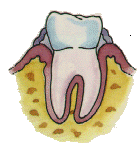
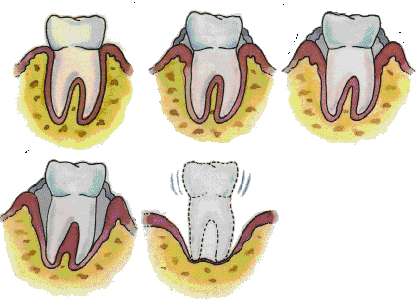
 The swelling of the gums contributes to deepening
of the sulcus (to form a pseudopocket) exposing previously covered enamel
- or, in severe cases, dentine - surface. The swelling of the gums contributes to deepening
of the sulcus (to form a pseudopocket) exposing previously covered enamel
- or, in severe cases, dentine - surface. |
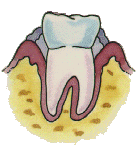  This allows the formation of an environment suitable for
the establishment of anaerobic bacteria underneath the gums (subgingival
plaque), which may lead to the much more serious gum disease, periodontitis.
This allows the formation of an environment suitable for
the establishment of anaerobic bacteria underneath the gums (subgingival
plaque), which may lead to the much more serious gum disease, periodontitis. |
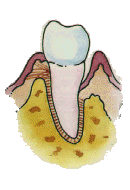
 Prolonged irritation of the periodontal membrane around a tooth can lead
to breakdown of the membrane and supporting structures, which is largely
due to the body's own defense mechanisms attempting to neutralize the bacteria
and their toxins.
Prolonged irritation of the periodontal membrane around a tooth can lead
to breakdown of the membrane and supporting structures, which is largely
due to the body's own defense mechanisms attempting to neutralize the bacteria
and their toxins. |
  This produces a gingival pocket which, if allowed to develop, exposes
the softer dentine in the root of the tooth.
This produces a gingival pocket which, if allowed to develop, exposes
the softer dentine in the root of the tooth. |
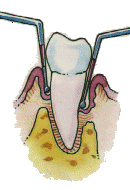
 Ultimately the supporting structures of the
tooth may be lost, and the body begins to re-adsorb (or resorb) the alveolar
bone in which the tooth was set.
Ultimately the supporting structures of the
tooth may be lost, and the body begins to re-adsorb (or resorb) the alveolar
bone in which the tooth was set. |
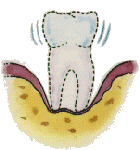  The tooth gradually loosens and, if the condition is left
untreated, the tooth will eventually be lost.
The tooth gradually loosens and, if the condition is left
untreated, the tooth will eventually be lost. |
|















 If environmental conditions promote the overgrowth of bacterial plaque
(e.g. poor oral hygiene), changes in the quantity and quality of the plaque
occur.
If environmental conditions promote the overgrowth of bacterial plaque
(e.g. poor oral hygiene), changes in the quantity and quality of the plaque
occur.
